
Cardiology & Electrophysiology
Neurology
Primary & Integrative Care
Pain & Chiropractic
Longevity & Wellness
Research & Clinical Trials
Who We Serve · Neurology
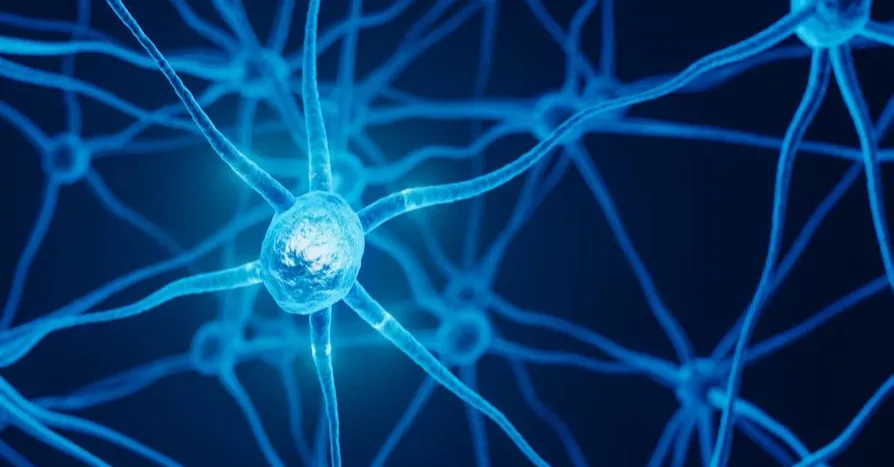
ANS Monitoring for Neurology
Evaluate the parasympathetic and sympathetic contributions to headaches, movement disorders, and neuropathy through non-invasive autonomic testing, providing objective insights into autonomic function to support clinical assessment and treatment planning.
See the technology live in a 60-minute
virtual session.

— Who We Serve · Neurology
ANS Monitoring for Neurology
Evaluate the parasympathetic and sympathetic contributions to headaches, movement disorders, and neuropathy through non-invasive autonomic testing, providing objective insights into autonomic function to support clinical assessment and treatment planning.
See the technology live in a 60-minute virtual session.
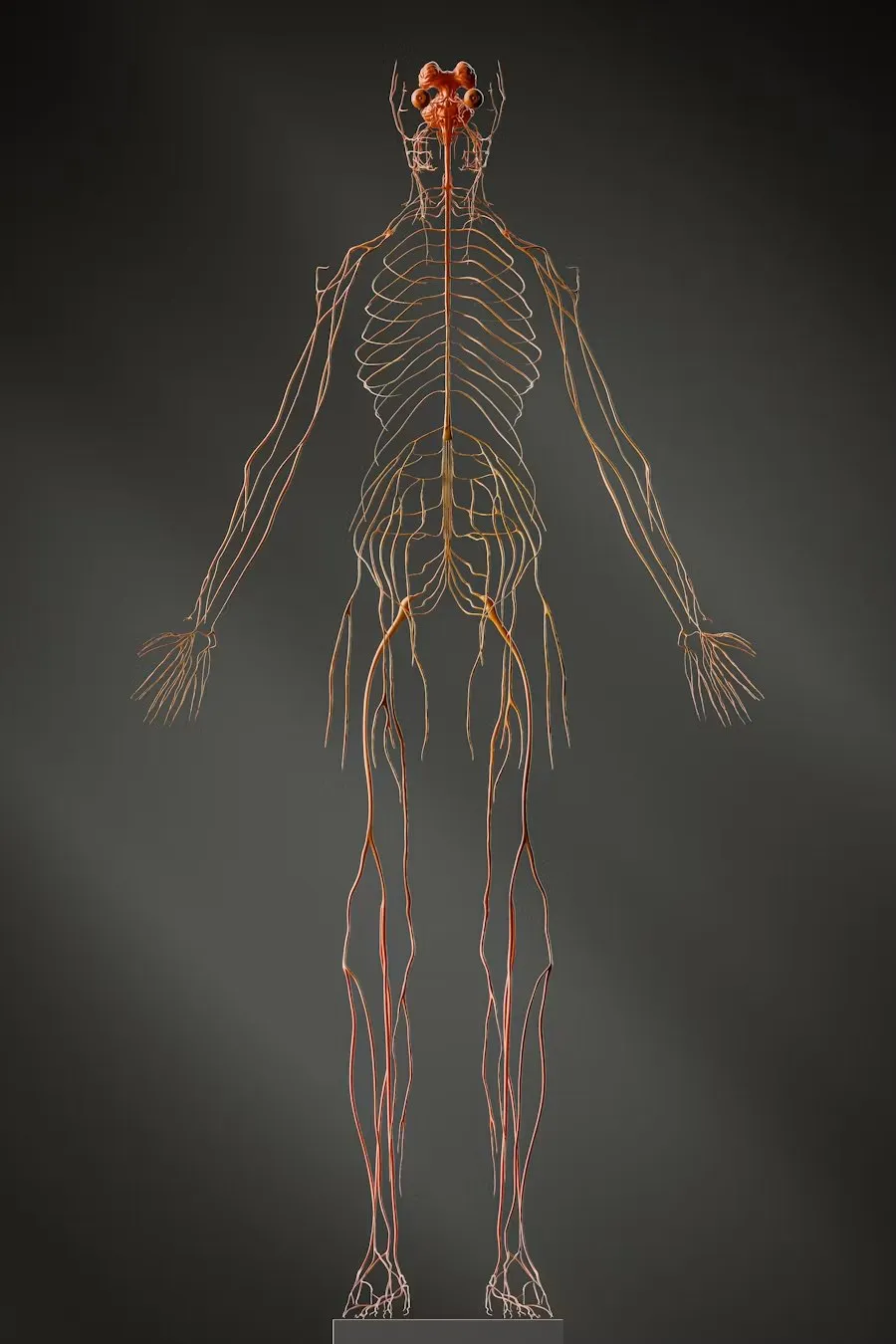
— The Clinical Case
Two Branches,
Measured Apart
Idiopathic peripheral autonomic neuropathy is one of the earliest signs of P&S dysfunction. Catching it early is what makes aggressive therapy worthwhile, and it is invisible to tools that report a single blended autonomic figure.
Multiple system atrophy and Parkinson’s disease are nearly identical in the early stages, and treating one with the other’s therapy accelerates progression. Because Parkinson’s preserves sympathetic innervation to the heart, monitoring differentiates them sooner.
Headache and migraine are separated into parasympathetically and sympathetically mediated forms, each pointing at different therapy
MSA and Parkinson’s are differentiated earlier, protecting against the therapy that accelerates the wrong one
Autonomic neuropathy is identified at its earliest stage, including the cardiovascular form that carries mortality risk
Once P&S balance is established, remaining symptoms can be attributed to the brain disorder itself rather than the autonomic layer
— The Clinical Case
Two Branches, Measured Apart
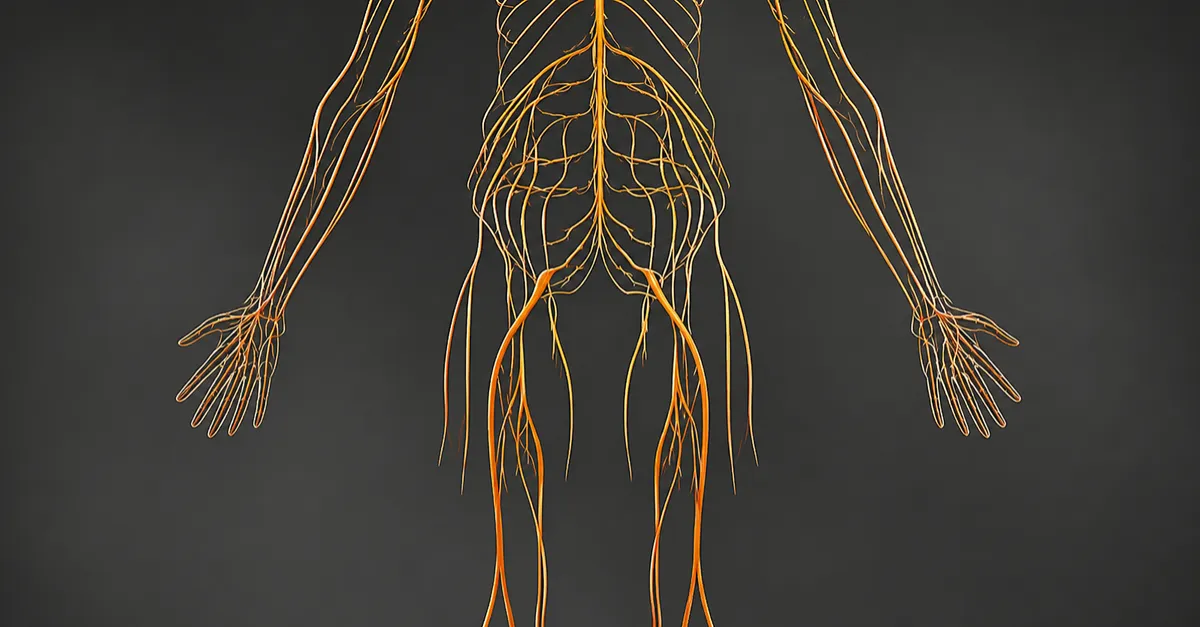
Idiopathic peripheral autonomic neuropathy is one of the earliest signs of P&S dysfunction. Catching it early is what makes aggressive therapy worthwhile, and it is invisible to tools that report a single blended autonomic figure.
Multiple system atrophy and Parkinson’s disease are nearly identical in the early stages, and treating one with the other’s therapy accelerates progression. Because Parkinson’s preserves sympathetic innervation to the heart, monitoring differentiates them sooner.
Headache and migraine are separated into parasympathetically and sympathetically mediated forms, each pointing at different therapy
MSA and Parkinson’s are differentiated earlier, protecting against the therapy that accelerates the wrong one
Autonomic neuropathy is identified at its earliest stage, including the cardiovascular form that carries mortality risk
Once P&S balance is established, remaining symptoms can be attributed to the brain disorder itself rather than the autonomic layer
— CONDITIONS
Neurology Conditions Where Autonomic Data Changes the Picture
Eighteen of the forty-three conditions in the index sit in neurology. A selection is below.
POTS (Postural Orthostatic Tachycardia Syndrome)
Characterized by an excessive increase in heart rate upon standing. Autonomic assessment provides additional information about sympathetic and parasympathetic function.
Syncope
A temporary loss of consciousness caused by reduced blood flow to the brain. Autonomic assessment may provide additional information about cardiovascular regulation.
Orthostatic Hypotension
Sympathetic withdrawal causing a blood pressure drop on standing, quantified specifically.
Orthostatic Intolerance
Difficulty tolerating an upright position, often involving dizziness, lightheadedness, or weakness. Autonomic assessment can provide insight into the body's response to postural changes.
Headaches and Migraine
P&S-mediated forms trace to improper brain perfusion; monitoring specifies which branch is driving it.
Parkinson’s Disease
A catecholaminergic disorder; monitoring identifies cardiovascular autonomic neuropathy to help minimise mortality risk.Idiopathic Peripheral Autonomic Neuropathy
One of the earliest signs of P&S dysfunction, enabling earlier and more aggressive therapy.
Depression and Anxiety
Depression is characterised by parasympathetic excess; anxiety by resting sympathetic excess or a challenge PE releasing excess adrenaline.Orthostatic Hypotension
Sympathetic withdrawal causing a blood pressure drop on standing, quantified specifically.
Post-Traumatic Stress Disorder (PTSD)
Involves both branches, presenting as sleep, GI, bladder and bowel dysfunction, lightheadedness and depression.
Multiple System Atrophy
Differentiated from Parkinson’s earlier, because Parkinson’s preserves sympathetic innervation to the heart.ADD / ADHD
A challenge parasympathetic excess causing secondary sympathetic excess, behind both the attention deficit and the hyperactivity.
Chronic Regional Pain Syndrome
Pain with both sympathetic excess, from the stress of pain, and parasympathetic excess, from compromised regional blood flow.
— CONDITIONS
Neurology Conditions Where Autonomic Data Changes the Picture
Eighteen of the forty-three conditions in the index sit in neurology. A selection is below.
POTS (Postural Orthostatic Tachycardia Syndrome)
Characterized by an excessive increase in heart rate upon standing. Autonomic assessment provides additional information about sympathetic and parasympathetic function.
Syncope
A temporary loss of consciousness caused by reduced blood flow to the brain. Autonomic assessment may provide additional information about cardiovascular regulation.
Orthostatic Hypotension
Sympathetic withdrawal causing a blood pressure drop on standing, quantified specifically.
Orthostatic Intolerance
Difficulty tolerating an upright position, often involving dizziness, lightheadedness, or weakness. Autonomic assessment can provide insight into the body's response to postural changes.
Headaches and Migraine
P&S-mediated forms trace to improper brain perfusion; monitoring specifies which branch is driving it.
Parkinson’s Disease
A catecholaminergic disorder; monitoring identifies cardiovascular autonomic neuropathy to help minimise mortality risk.
Post-Traumatic Stress Disorder (PTSD)
Involves both branches, presenting as sleep, GI, bladder and bowel dysfunction, lightheadedness and depression.
Multiple System Atrophy
Differentiated from Parkinson’s earlier, because Parkinson’s preserves sympathetic innervation to the heart.ADD / ADHD
A challenge parasympathetic excess causing secondary sympathetic excess, behind both the attention deficit and the hyperactivity.
Chronic Regional Pain Syndrome
Pain with both sympathetic excess, from the stress of pain, and parasympathetic excess, from compromised regional blood flow.Depression and Anxiety
Depression is characterised by parasympathetic excess; anxiety by resting sympathetic excess or a challenge PE releasing excess adrenaline.Idiopathic Peripheral Autonomic Neuropathy
One of the earliest signs of P&S dysfunction, enabling earlier and more aggressive therapy.
— In the Room
What the Visit Looks Like
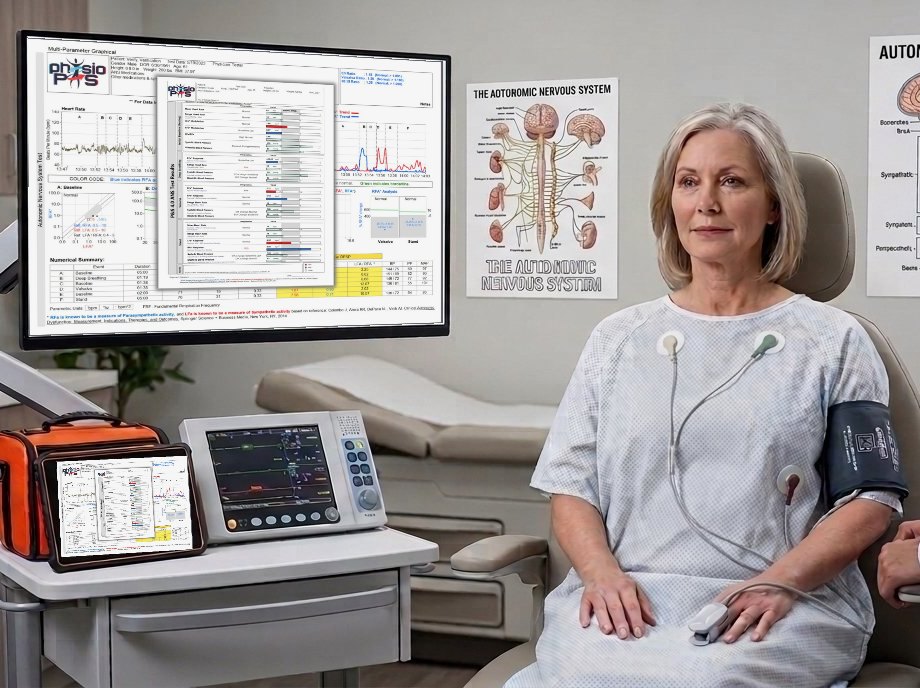
Patient seated, leads placed
A heart rate monitor, ECG leads and a blood pressure cuff. Nothing invasive, no tilt table.
Both branches resolved separately
The software measures RFa and LFa, giving parasympathetic and sympathetic activity as two independent readings.
Report before the patient leaves
Qualitative, quantitative and graphical output, ready for your review and for the patient to take home.
— Billing and Setup
Supported by Fundable Billing Codes
The assessment is supported by fundable billing codes, adding a documented revenue stream to your practice without adding staff burden. Training and certification are included, so your team is ready from day one.
Ask about billing code applicability for your specialty during your demo.
✓ FDA 510(k) Cleared ✓ Patented Technology ✓ Backed by Published Research
See the Neurology Workflow Live
See the technology live in a 60-minute virtual session.
— Next Step
Start Where It Makes Sense for You
FDA 510(k) cleared autonomic nervous system monitoring for clinics, home care and research. Serving physicians, clinics and researchers across the United States and worldwide.
Site
Who We Serve
Journal
Contact
603-287-1817
80 Nashua Rd, Building C, Unit G1, Londonderry, NH 03053
© 2026 Physio PS, Inc. All rights reserved. FDA 510(k) cleared · Patented · Established 2019.
Hours available on request, ask during your demo.
Copyright 2026 Physio PS, Inc. All Rights Reserved.
The material and information provided by Physio PS is for general information purposes only. You should not rely upon this material or information for basis of making healthcare, treatment, or diagnosis decisions. While Physio PS strives to provide the most correct and up-to-date information and data, Physio PS makes no representations or warranties of any kind, expressed or implied, about the completeness, accuracy, reliability, suitability, or availability with respect to the information, products, services, or related graphics contained. Any reliance placed on such material is therefore strictly at your own risk. Reporting Information is supplied under license by NCRC LLC. * ‘RFa’ is known to be a measure of Parasympathetic activity and ‘LFa’ is known to be a measure of Sympathetic activity, based on reference: Colombo J, Arora RR, DePace NL, Vinik AI, Clinical Autonomic Dysfunction: Measurement, Indications, Therapies, and Outcomes. Springer Science + Business Media, New York, NY; 2014.
— FAQ
Questions Practices Ask Before They Start
Straight answers on time, cost, clearance and fit.
How long does an assessment take?
A complete autonomic assessment is non-invasive and takes 15 minutes. It is fully automated, and the qualitative, quantitative and graphical reports are delivered without manual interpretation.
Is the technology FDA cleared?
Yes. The platform is FDA 510(k) cleared to U.S. medical device standards, patented, and backed by published research.
How is testing paid for?
The Clinical Monitoring Unit is supported by fundable billing codes. For the other systems, ask about billing code applicability during your demo. Financing options, low monthly payments and veteran-owned discounts are available to qualifying practices.
Do we need extra staff, space or a tilt table?
No. Testing integrates with your existing treatment protocols with no workflow overhaul and no tilt table required. Training and certification are included, so your team is ready from day one.
How is this different from heart rate variability tools?
It is the only solution on the market that measures both parasympathetic and sympathetic branches independently, simultaneously and quantitatively, rather than reporting one blended figure.
Which system fits my practice?
The CMU is a desktop system for clinics, the RMU is tablet-based and battery-powered for home care and sports medicine, and the PAL is laptop-based for medical professionals who move between facilities. A free demo is the quickest way to find the right configuration.
How do I become a distributor?
Tell us about your territory and the clinics you work with through the distributor enquiry form, or call 603-287-1817, and the team will follow up to discuss distribution.
See the Neurology Workflow Live
See the technology live in a 60-minute virtual session.
✓ FDA 510(k) Cleared ✓ Patented Technology ✓ Backed by Published Research
— Next Step
Start Where It Makes Sense for You
FDA 510(k) cleared autonomic nervous system monitoring for clinics, home care and research. Serving physicians, clinics and researchers across the United States and worldwide.
Site
Who We Serve
Journal
Contact
603-287-1817
80 Nashua Rd, Building C, Unit G1, Londonderry, NH 03053
© 2026 Physio PS, Inc. All rights reserved.
FDA 510(k) cleared · Patented · Established 2019.
Hours available on request, ask during your demo.
Copyright 2026 Physio PS, Inc. All Rights Reserved.
The material and information provided by Physio PS is for general information purposes only. You should not rely upon this material or information for basis of making healthcare, treatment, or diagnosis decisions. While Physio PS strives to provide the most correct and up-to-date information and data, Physio PS makes no representations or warranties of any kind, expressed or implied, about the completeness, accuracy, reliability, suitability, or availability with respect to the information, products, services, or related graphics contained. Any reliance placed on such material is therefore strictly at your own risk. Reporting Information is supplied under license by NCRC LLC. * ‘RFa’ is known to be a measure of Parasympathetic activity and ‘LFa’ is known to be a measure of Sympathetic activity, based on reference: Colombo J, Arora RR, DePace NL, Vinik AI, Clinical Autonomic Dysfunction: Measurement, Indications, Therapies, and Outcomes. Springer Science + Business Media, New York, NY; 2014.